
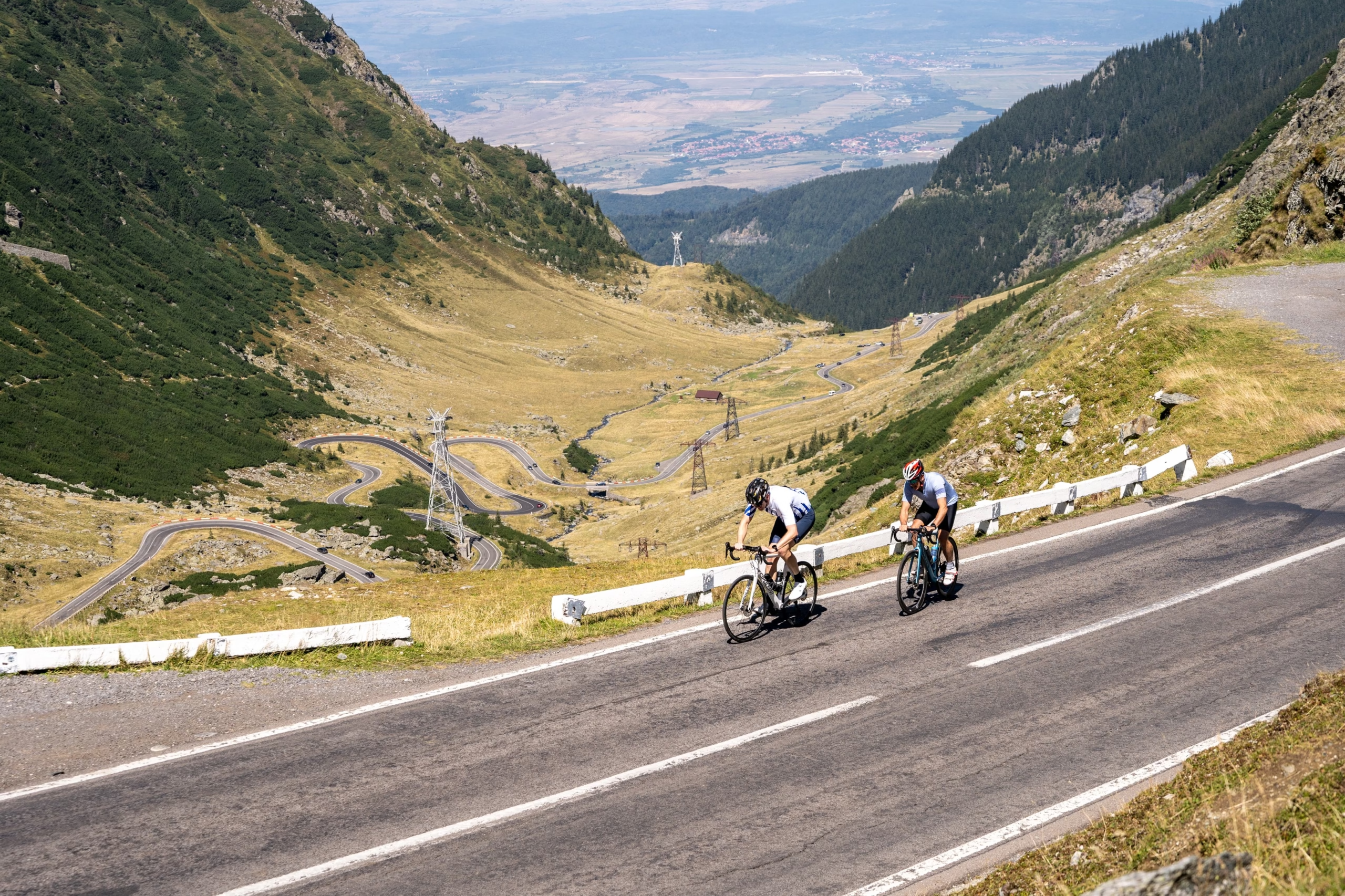
Cycling the Transfagarasan – Romania’s Legendary Mountain Road
The Transfăgărășan Road, often called “the best driving road in the world”, is just as impressive when experienced on two wheels. For road cyclists, it is one of the most iconic climbs in Eastern Europe and a true highlight of cycling in Romania. Built in the early 1970s under Nicolae Ceaușescu, this spectacular alpine road crosses the Făgăraș Mountains, the highest range of the Southern Carpathians, linking Transylvania with Wallachia.
At its highest point, the road reaches 2,042 meters above sea level near Bâlea Lake. From here, the views stretch across sharp ridgelines, glacial valley, and steep rock faces, making the effort of the climb more than worthwhile.
The north face of the Transfăgărășan starts in the village of Cârțișoara and is the side most cyclists choose for its steady rhythm and dramatic scenery. From the first kilometers, the road begins to rise gradually through forested slopes before opening up into wide alpine terrain.
From Cârțișoara to Bâlea Lake, the climb measures approximately 25 kilometers. The average gradient is around 5.5–6 percent, making it a long but manageable ascent for well-prepared cyclists. The maximum gradient reaches roughly 8–9 percent on some of the steeper ramps near the top. What makes this climb special is its consistency: there are very few flat sections, allowing riders to settle into a steady tempo.
Along the north face, cyclists will tackle around 25–30 hairpin bends, most of them concentrated in the final kilometers above the treeline. These switchbacks are visually spectacular, especially when looking back down the valley, and offer some of the most photographed views on the entire road.
The Transfăgărășan is open only during the summer season, usually from mid-June until late October, depending on snow conditions. Even in midsummer, weather at the top can be very different from what riders experience at the start. It is common for temperatures at Bâlea Lake to be 10 degrees Celsius or more cooler than in Cârțișoara. Sudden fog, strong winds, and quick weather changes are all part of the alpine experience.
For this reason, a wind jacket is strongly recommended for the descent, regardless of how warm it feels at the bottom. Long descents from over 2,000 meters can become very cold very quickly, especially if clouds or wind move in.
At the top, Bâlea Lake offers several options for food and rest. Two permanent restaurants serve hot meals throughout the season: Paltinu Restaurant and Cabana Bâlea Lac. Both are popular with cyclists, hikers, and drivers, and are ideal places to refuel after the climb. During summer, there are also many small food stands around the lake selling traditional Romanian products.
Traffic is an important factor to consider when planning your ride. The Transfăgărășan can be very busy with cars and motorcycles on weekends and public holidays, particularly in August, which is peak travel season in Romania. Early morning starts are highly recommended for cyclists who want a quieter and safer experience. Wild brown bears live in the Făgăraș Mountains and do sometimes come close to the road on both the north and south faces of the Transfăgărășan, more often on the southern side. They are wild animals, and cyclists should continue riding, keep their distance, and never stop or try to interact with them.
Despite these challenges, cycling the Transfăgărășan remains a bucket-list experience. The combination of length, altitude, scenery, and history makes it one of the most rewarding climbs in the Carpathians and a must for anyone interested in cycling in Romania.
We include this iconic climb in several of our tours:
Whether you're joining a short adventure or a week-long journey, cycling the Transfagarasan is a once-in-a-lifetime experience and a must for anyone discovering cycling in Romania.

Comments are closed.